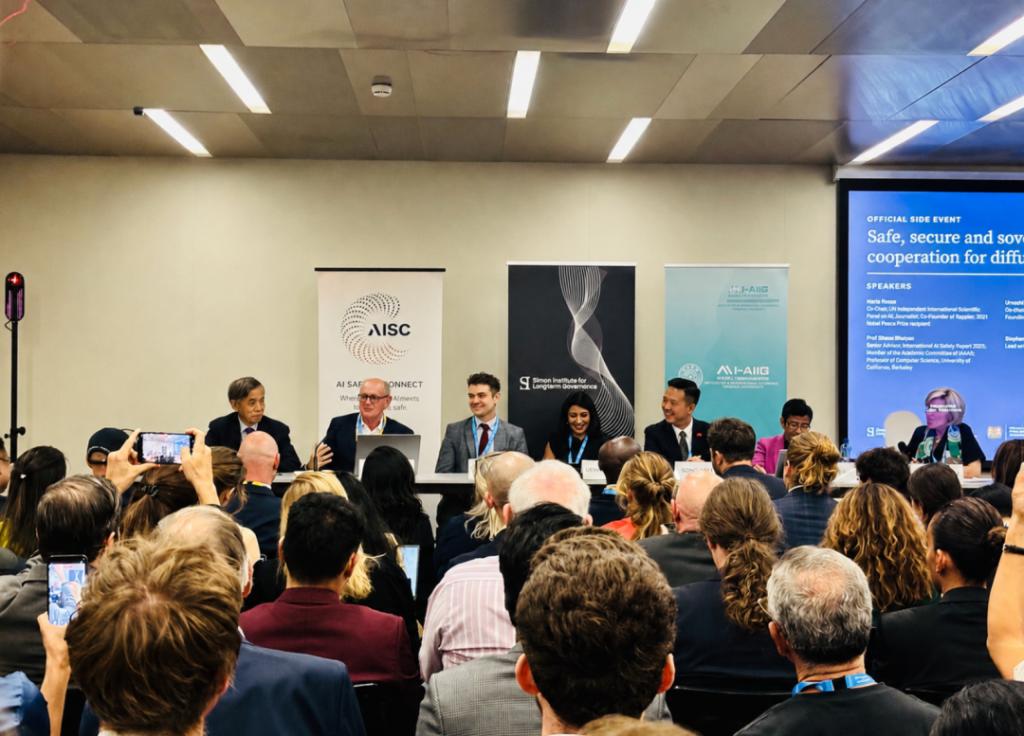
On July 6, 2026, the Institute for AI International Governance (I-AIIG) at Tsinghua University and the Simon Institute for Longterm Governance (SI) co-hosted the official side event “Safe, Secure and Trustworthy AI: Bridging Global Evidence and Local Realities through Scientific Collaboration” at the inaugural UN Global Dialogue on AI Governance in Geneva.
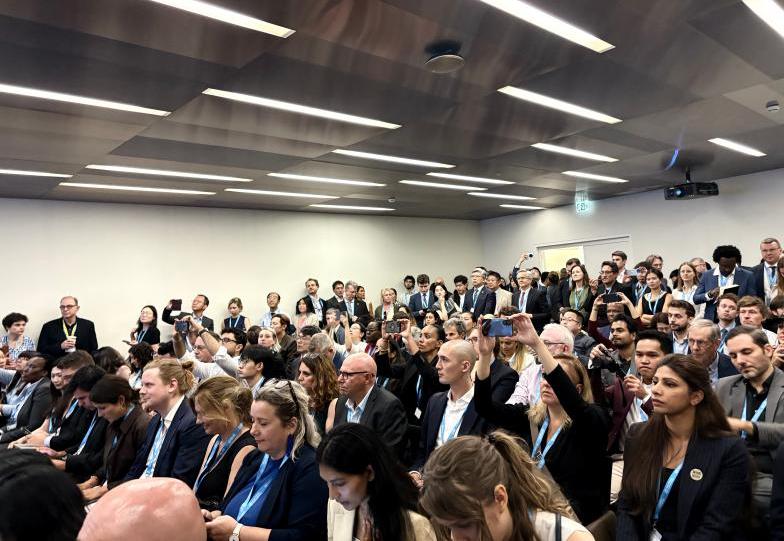
The event gathered nearly 200 participants from governments, international organizations, academia, industry, and civil society to discuss how scientific collaboration can strengthen global AI governance and translate shared evidence into practical action. The event was organized in collaboration with the following partners: AI Safety Connect (AISC); International Association for Safe and Ethical AI (IASEAI); Office of the Special Envoy on Technology, Kenya; Global South Network on Trustworthy AI; University of Geneva; University of Zurich; Globethics; World Federation of Engineering Organizations – Engineering Capacity Building for Africa Programme (WFEO ECBAP); International AI Governance Association; UNU Hub on Promoting Ethical and Responsible Artificial Intelligence Development; UNU AI Network; Natural, Artificial, and Organisation Intelligence Institute, University of Auckland; China Internet Governance Forum; CAST UN Consultative Committee on Science Diplomacy; Colégio Brasileiro de Altos Estudos; Federal University of Rio de Janeiro; Minderoo Foundation; and the UN Foundation.
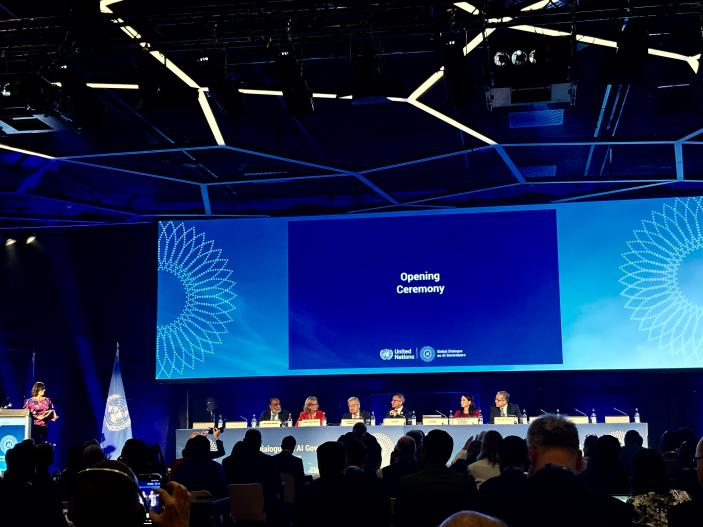
Earlier that day, the UN officially opened the first Global Dialogue on AI Governance, established under the Pact for the Future and its annex, the Global Digital Compact. The Dialogue brought together governments and stakeholders from around the world on an equal footing, marking the first UN-mandated platform dedicated to AI governance.
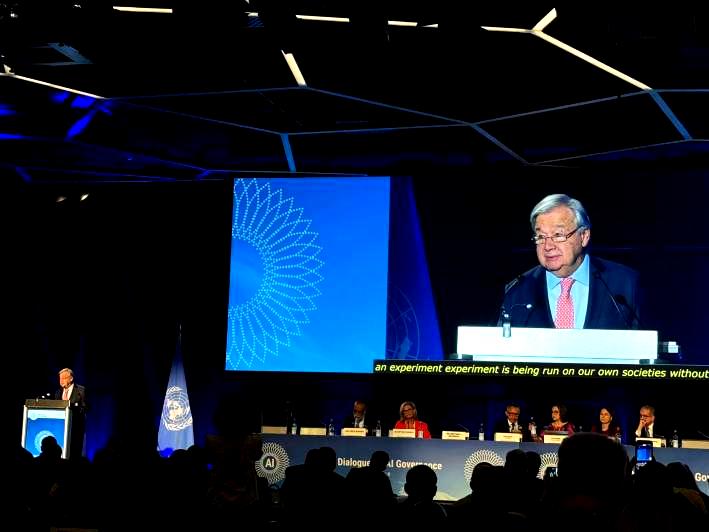
In his opening remarks, UN Secretary-General António Guterres warned that AI is progressing at “runaway speed” and called for collective action to establish common safety standards, strengthen transparency and accountability, promote human rights, and expand capacity-building for developing nations.
The Dialogue also featured the release of the Preliminary Report: Evidence-based Assessment of Opportunities, Risks and Impacts of AI by the UN Independent International Scientific Panel on AI. The report concludes that AI capabilities are advancing faster than the world’s ability to measure and govern them, making stronger scientific cooperation a vital foundation for effective AI governance.
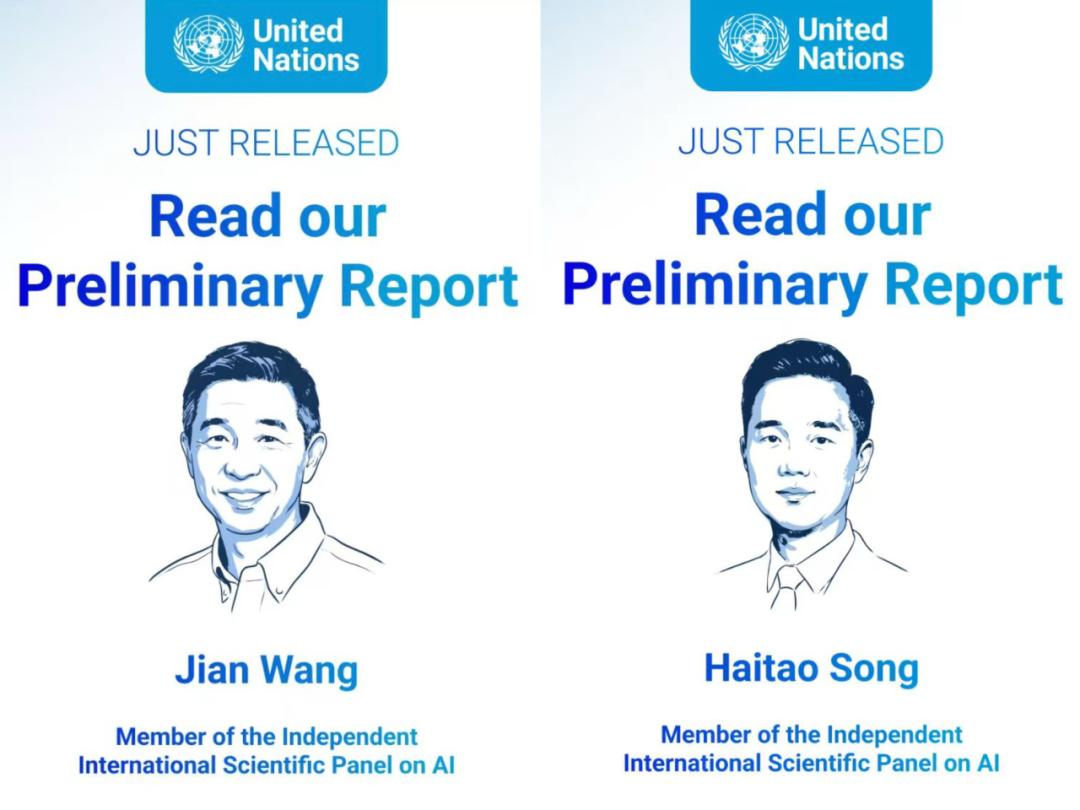
The side event included a distinguished group of international experts and policymakers, including H.E. Ambassador Philip Thigo, Special Envoy on Technology of the Republic of Kenya; H.E. Ambassador Shen Jian, Deputy Permanent Representative of China to the United Nations Office at Geneva; Maria Ressa, Co-Chair of the UN Independent International Scientific Panel on AI and 2021 Nobel Peace Prize Laureate; Professor Xue Lan, Distinguished Professor and Dean of Tsinghua University’s I-AIIG; Professor Stuart Russell, Professor of Computer Science at the University of California, Berkeley and Member of the I-AIIG Academic Committee; Urvashi Aneja, Co-Chair of the Global South Network on Trustworthy AI; Stephen Clare, Lead Writer of the International Scientific Report on the Safety of Advanced AI; Song Haitao, Member of the UN Independent International Scientific Panel on AI and President of the Shanghai Artificial Intelligence Research Institute; and Renata Dwan, Director of SI’s Tech Diplomacy.
The discussion explored the emerging scientific consensus on AI safety, key governance priorities, the relationship among scientific research, industry, and policymaking, and pathways to strengthen international cooperation ahead of the next Global Dialogue in 2027.
During the panel discussion, Professor Xue Lan emphasized that international scientific collaboration has long driven technological progress and remains indispensable for addressing global challenges, including AI safety.
He stressed that the international scientific community should uphold openness, inclusiveness, and mutual trust, and that geopolitical tensions should not constrain scientific cooperation. He noted that excluding researchers on the basis of nationality runs counter to science’s fundamental values and undermines humanity’s collective interests.
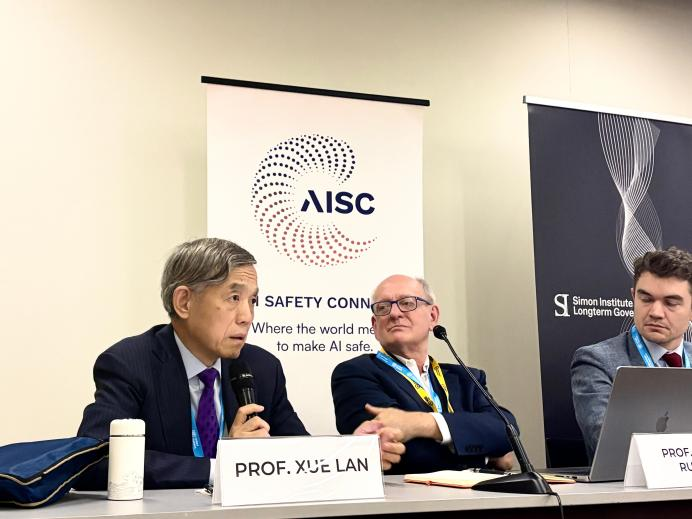
To strengthen international cooperation, Professor Xue proposed three priorities: safeguarding the principles of the global scientific community, establishing “safe zones” for collaboration in areas such as AI safety that serve the common good, and investing more resources in international research partnerships, talent exchanges, and knowledge sharing to bridge capacity gaps, particularly in developing countries.
Professor Xue also highlighted the important role governments play in supporting AI safety research. He called for closer collaboration among national AI safety research institutions to strengthen scientific cooperation and ensure effective implementation of AI safety standards.
Throughout the discussion, speakers agreed that scientific understanding of AI risks has advanced significantly and that stronger international collaboration is necessary for translating scientific evidence into effective governance.
Maria Ressa underlined the urgency of developing governance frameworks that keep pace with advancing AI capabilities. Professor Stuart Russell argued that AI innovation should operate within a clearly defined “safe envelope,” supported by internationally agreed behavioral boundaries. Song Haitao emphasized that greater collaboration between scientists and industry can accelerate AI governance by expanding access to frontier systems, computational resources, and practical evidence.
By convening leading experts from diverse regions and disciplines, the side event provided an important platform for dialogue between the scientific and policy communities. It also demonstrated I-AIIG’s commitment to advancing international scientific cooperation and to contributing Chinese expertise toward a more inclusive, evidence-based, and collaborative global AI governance framework.